Introduction
In the competitive realm of digital marketing, social media presence has transitioned from a creative endeavor to a data-centric science. Instagram, with its massive user base and complex recommendation engine, requires more than just high-quality aesthetic output; it demands a granular understanding of how your target audience engages with your brand. Instagram profile activity monitoring is the systematic process of observing engagement patterns, tracking user interactions, and identifying shifting content trends to refine your strategic approach. By moving beyond vanity metrics—such as raw follower counts—and focusing on actionable performance data, businesses can pivot their content strategy based on real-world behavior. This article explores the depths of data-driven growth, providing a comprehensive framework for monitoring your own presence, analyzing competitors, and navigating the nuances of the Instagram ecosystem.
The Anatomy of Instagram Algorithms and Data
To effectively monitor activity, one must first understand the fundamental mechanics of the Instagram algorithm. The platform functions as a multifaceted recommendation engine prioritizing three core pillars: user interest, relationship strength, and timeliness. When you publish content, the algorithm performs a 'test distribution' to a small subset of your audience. The platform monitors 'signals'—such as the time spent viewing a post, interaction duration, comments, shares, and saves. These metrics determine the content's velocity and dictate whether it will be distributed to a wider audience through the Explore page or hashtag feeds. Recognizing these signals is the first step in successful profile activity monitoring.
How the Algorithm Interprets Profile Activity
Profile visits act as high-intent signals. Unlike a casual scroll through the main feed, a visit to your profile signifies that a user has actively sought out more information about your brand. Monitoring your profile visits in direct correlation with your content schedule allows you to identify which specific posts serve as 'gateways' into your brand ecosystem. If a particular reel or static carousel consistently triggers an influx of profile visits, that format has become a primary driver of your brand awareness. By tracking the delta in these visits over a 24-hour cycle, you can identify the exact time windows when your audience is most likely to move from a passive consumer to an active researcher.
The Lifecycle of Stories and Highlights
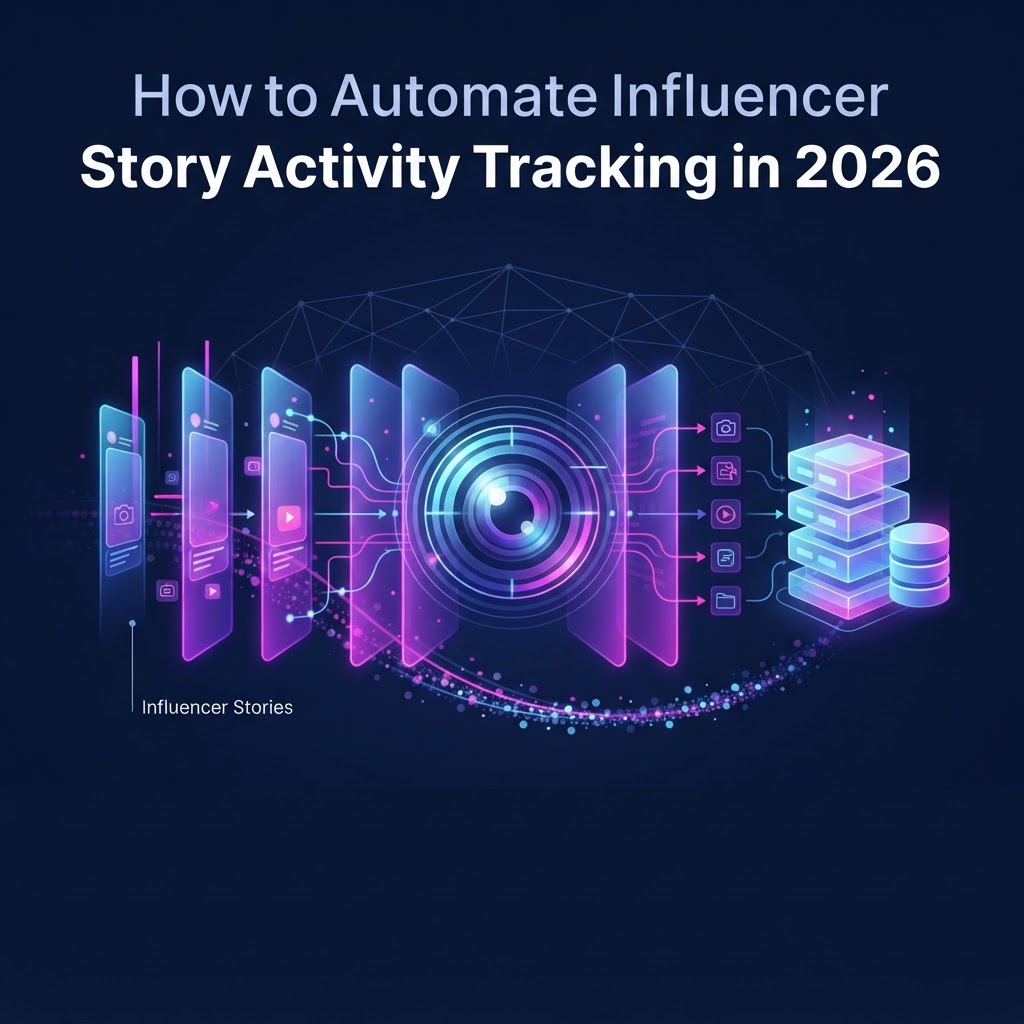
Stories operate in a high-frequency, low-friction environment. Because they vanish after 24 hours, the data window is intentionally tight, fostering a sense of urgency. By integrating interactive elements such as polls, question boxes, and stickers, you generate behavioral data that helps map out audience preferences in real-time. Highlights act as a long-term repository for your best content. Periodic audits of your highlights are essential; they represent the 'front door' of your profile. If you notice that specific highlights receive consistently low engagement, they may no longer serve your current brand messaging or may be poorly categorized for new visitors.
Advanced Techniques for Profile Activity Tracking
While native Instagram insights provide a baseline for performance, they are inherently limited. Serious strategists must develop a more robust workflow to understand the competitive landscape and deep user sentiment.
Establishing a Data-Driven Workflow
Success in monitoring requires consistency. Begin by creating a centralized database—often a spreadsheet or a business intelligence dashboard—to log weekly performance metrics. Categorize your content by 'pillar' or 'theme' to track which topics drive the most profile engagement. Record metrics such as reach, engagement rate, shares per 1,000 impressions, and, most importantly, profile visits. This manual or semi-automated logging allows you to identify seasonal trends that appear over months rather than days. For those requiring a more discreet approach to analyzing content trends or monitoring specific activity patterns without influencing the platform's feed personalization, specialized tools such as those found at instaspy.ai provide the environment necessary for objective data gathering.
Comparing Native Tools vs. Third-Party Solutions
Native insights are excellent for internal demographic data, but they lack the external scope required for deep market research. Third-party tools are essential for competitive benchmarking, where you need to assess how your content performs relative to industry peers. When choosing your monitoring stack, consider the following distinctions:
- Native Insights: Best for audience demographics and internal account trends.
- Competitive Analysis: Third-party tools allow you to track the growth rate and engagement patterns of rival accounts.
- Discretion: Specialized services allow for private analysis of activity without triggering notification loops or altering your 'Recommended' feed.
- Strategic Benchmarking: Advanced tools provide sentiment analysis and keyword performance across broader sectors.
Optimizing Content Based on Performance Metrics
Data is only as valuable as the actions it triggers. If your monitoring shows that specific content formats perform poorly, you must have the discipline to retire those formats regardless of personal preference.
The 'Save' and 'Share' Economy
Modern Instagram success is anchored in the 'save' and 'share' metrics. These indicate community trust and content utility. Likes have become a low-barrier, vanity metric. Conversely, a 'save' indicates that a user intends to return to your content—perhaps an educational carousel or a product guide—which sends a powerful signal to the algorithm that your brand provides long-term value. If your monitoring indicates that educational posts drive higher saves, you should shift your content budget to favor long-form, value-dense content over ephemeral, high-aesthetic-low-substance posts.
Troubleshooting Content Performance Dips
When engagement figures stagnate, avoid reactive pivots. First, compare your current reach against your six-month historical baseline. If reach has dropped but your engagement rate remains constant, you are likely experiencing an algorithmic fluctuation or a broader seasonal industry downturn. If both reach and engagement have plummeted, you must audit your content pillars. Are your visuals stale? Has your messaging lost its unique value proposition? Use your monitoring data to perform A/B testing on your hooks—the first three seconds of a reel or the first sentence of a caption—to determine if your audience has simply lost interest in your current delivery style.
Try InstaSPY now
View your first Instagram profile anonymously for free
Enter a username to view available stories, highlights, reels, and posts without an Instagram login.
No Instagram password required
Platform-Specific Nuances: Desktop vs. Mobile
User behavior changes significantly depending on the device. Mobile users typically engage in a 'flick' style of consumption, characterized by rapid scrolling and limited attention spans. Desktop users, while a smaller demographic, often engage in higher-intent browsing, potentially spending more time on your profile, reading detailed captions, or visiting your website.
Mobile Behavioral Patterns
On mobile, your vertical real estate is precious. Monitoring should focus on how quickly users engage with the 'hook' in your video content. If your mobile retention data shows a sharp drop-off within the first two seconds, your visual hierarchy is failing to stop the scroll. Adjust your editing rhythm, text overlays, or lighting to ensure the hook is immediately identifiable and compelling on small screens.
Desktop Deep-Dives
Desktop users provide a clear view of your profile conversion potential. Monitor the correlation between profile visits and link-in-bio clicks. A high profile-visit-to-link-click ratio indicates that your bio and featured highlights are effectively convincing users to leave the platform for your owned ecosystem. If you see high traffic to your profile but low conversion at the link, your landing page or the call-to-action (CTA) button itself is likely the bottleneck.
Privacy, Security, and Professional Boundaries
Monitoring and research must be conducted ethically. Never use tools that demand your direct login credentials, as these violate Instagram’s Terms of Service and put your account at high risk of being flagged or banned. Protect your brand by utilizing platforms that gather data via public APIs or external observation rather than requiring internal access to your account.
Avoiding Data Fatigue
It is common to suffer from 'analysis paralysis.' Focus on aggregate data rather than obsessing over the activity of a single user or a handful of data points. Excessive manual monitoring leads to burnout and a short-sighted perspective. Maintain a macro view: look at the trends emerging across your content categories over a 30-day period. This perspective is far more indicative of business health than the performance of a single post.
Legal Context and Best Practices
While public information is available for gathering and analysis, always maintain professional and ethical boundaries. Monitoring should never cross the line into harassment or stalking. The primary purpose of profile activity monitoring is to improve your brand’s content resonance, optimize community management, and enhance your digital marketing strategy. By focusing on professional growth, you ensure your activities remain within ethical and legal parameters.
Strategic Competitive Benchmarking
Your own data only tells half the story. To truly excel, you must understand where you stand in the market. Select five direct competitors and three aspirational brands—those that represent the pinnacle of your niche.
Structural Gap Analysis
Look for structural holes in their strategy. Do they post consistently? Are they responsive to audience comments? Do they utilize short-form video to its full potential? By mapping these out, you can identify 'blue ocean' opportunities. For instance, if your competitors are producing high-gloss, professional content, there may be a vacuum for raw, authentic, behind-the-scenes content that builds deeper community trust. Utilize your monitoring tools to capture and categorize their high-performing content, using it as a reference for your own content ideation.
FAQs
Why is my engagement rate dropping despite more followers?
Follower growth does not equal audience growth. If you are gaining followers through passive channels or non-niche content, these new followers may not actually be interested in your brand. A drop in engagement often suggests that your follower base is becoming 'diluted' with users who do not align with your core target demographic.
How long should I wait before evaluating the success of a new strategy?
A minimum of 30 days is required. Instagram's recommendation engine needs time to 'learn' the new signals you are sending through your updated content strategy. Radical changes within a week will not provide enough data to draw accurate conclusions.
What is the difference between reach and impressions?
Reach represents the number of unique accounts that have seen your content. Impressions represent the total number of times your content was displayed on screens. A high impression-to-reach ratio suggests that your content is being viewed multiple times by the same users, which is excellent for brand recall.
Are there risks to using third-party analytics tools?
Yes. The primary risk is account security. Never use an application or website that asks for your Instagram password or secondary authentication codes. Stick to reputable, secure tools that analyze publicly available data without requiring unauthorized account access.
Can monitoring help improve my bio conversion rate?
Yes. By A/B testing your bio copy, link-in-bio tools, and highlight covers, you can observe which configurations lead to the highest number of click-throughs. If you change your bio text and see a spike in link clicks within 48 hours, you have found a winning formula.
What if I don't see any growth after monitoring for a month?
If you see zero growth, your content likely lacks a clear value proposition or is not being optimized for Instagram Search (SEO). Ensure your captions include relevant keywords, your profile name includes your niche, and your content focuses on solving a specific problem for your audience rather than simply broadcasting your own updates.