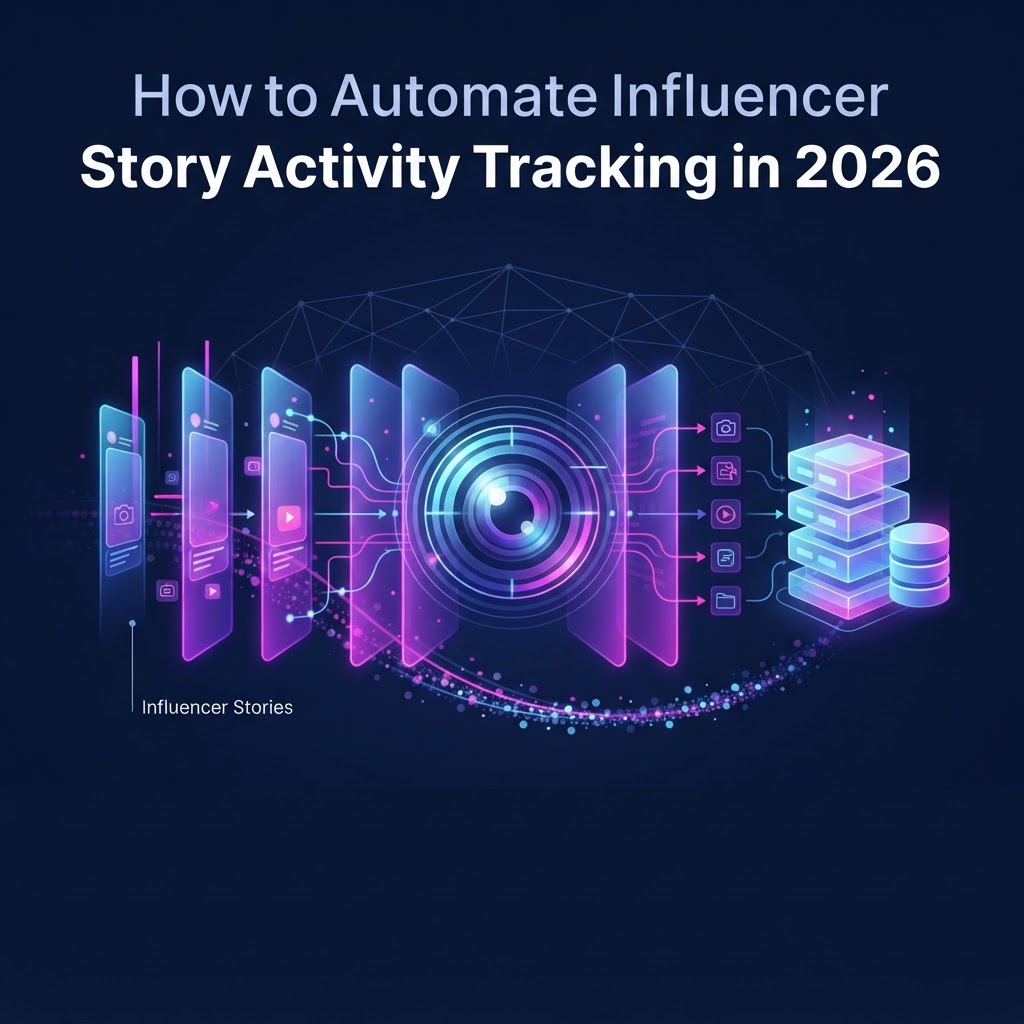
The Strategic Importance of Silent Observation In the fast-paced world of digital marketing, passive monitoring of Instagram business pages is no longer a luxury—it is a necessity for staying ahead of industry shifts. When you monitor business pages, you gain access to the laboratory of your competitors, seeing exactly what creative hooks, visual aesthetics, and engagement strategies are currently resonating with your shared target audience. For CMOs and social media managers, the primary goal is to gather actionable intelligence while maintaining a completely anonymous posture. The core mechanism behind this strategy is the avoidance of the observer effect. On platforms like Instagram, every interaction—viewing a story, visiting a profile, or hovering over a post—is logged in the platform's backend infrastructure. By decoupling your research from your professional or personal profile, you prevent your own algorithmic feed from being contaminated by your research habits. Without this separation, your feed becomes a reflection of your competitors' activities, which effectively creates an echo chamber that limits your ability to discover new industry trends. Passive monitoring is not about espionage; it is about objective data collection. It allows brands to audit the effectiveness of competitor ad copy, identify recurring themes in user-generated content, and understand the cadence of promotional blasts without alerting the subject of the study. This strategic silence ensures that your own creative direction remains authentic and untainted by the bias of constant competitor exposure.
Understanding Instagram's Backend Data Delivery To perform effective passive monitoring, you must understand how Instagram serves content. When a business page publishes a Story, it is delivered via a specific session-based token. When you view this natively, your unique user ID is attached to the view count. This is how brands know exactly who is watching their content. By using a secure interface, you can intercept this delivery mechanism without your unique identifiers being passed back to the Instagram API. This allows you to view high-resolution media, read captions, and monitor Highlight activity without triggering any notification or recording a view on their end. Whether you are on desktop, iPhone, or Android, the fundamental data structure remains the same; however, accessing it via a specialized viewer ensures that your device's fingerprint—such as IP address or browser cookies—is not linked to the activity. The mechanism involves proxying the request through an external server. When you request a profile's data, the third-party server makes the request on your behalf, acting as a blind bridge. Because the request originates from the server's IP rather than your residential or corporate ISP, the platform cannot link the request to your device. This is vital for privacy, as many corporate networks are monitored, and internal traffic patterns to competitors can sometimes trigger internal security alerts. By using this middleware, you create a layer of abstraction that serves as a firewall between your professional identity and the competitive intelligence gathering process.
Establishing a Disciplined Monitoring Workflow A professional approach to passive monitoring requires more than just checking pages sporadically. You need a systemic, repeatable process. Start by creating a tiered competitor list.
Curating Your Competitor Set Select 10 to 15 accounts across three categories: direct market competitors, aspirational industry leaders, and wildcard accounts in adjacent industries. The wildcard accounts are often where you find the next big trend before it reaches your specific niche. Categorizing allows for a granular view of market health. Direct competitors tell you how the war for attention is being fought, while industry leaders show you where the budget is flowing. Wildcards are crucial for cross-pollination; a skincare brand might find its next great video hook by monitoring a fast-paced technology influencer.
Defining Your Cadence and Frequency High-velocity industries such as fashion or tech require daily monitoring. If you operate in a slower B2B space, a bi-weekly cadence is often sufficient to identify core shifts in content strategy. The key is to document changes in a consistent format so you can look back at data trends over 30, 60, and 90-day intervals. A consistent cadence eliminates the noise of short-term variations and highlights the signal of long-term strategic pivots.
Segmenting and Categorizing Data Maintain a master sheet that categorizes content into four buckets: educational, promotional, community-building, and trend-responsive. Use this to determine which formats drive the most meaningful engagement. If you are tracking event-specific marketing, look for archival methods to keep a library of successful campaign executions. Data segmentation turns a deluge of visual content into actionable metrics. By tracking the percentage of content types, you can deduce the target KPIs of your competitors. If a competitor is shifting from 70% educational content to 70% promotional, it often indicates a transition in their sales cycle or a new product launch phase.
Common Mistakes and How to Avoid Them The most common mistake in passive monitoring is the accidental engagement. This occurs when a user is logged into their primary business account and inadvertently clicks a link, follows a user, or hits a heart icon while scrolling. To mitigate this risk, never perform research from your logged-in business browser. Use a clean-slate browser environment or a dedicated viewer tool that requires no login. Another major mistake is ignoring lost content. Stories disappear after 24 hours, and Reels are often repurposed. If you don't have a system to archive or note these assets, you lose the ability to perform comparative analysis later. Use tools to capture data consistently and maintain a database of screenshots or saved files. Another error is neglecting the metadata of a post. While the visual is the most obvious element, the caption, the hashtags, and the tag-location are equally important. Competitors often use specific keywords to test search engine optimization (SEO) performance. By failing to record these, you ignore the secondary layer of their content strategy. Finally, avoid the 'mirroring trap.' Just because a competitor is doing something does not mean it is successful. Watch for repeat patterns—if they run a specific format for six weeks, it is likely yielding ROI. If they run it for two days and abandon it, it was likely an unsuccessful test.
Troubleshooting and Technical Edge Cases When performing research, you may occasionally run into issues like geo-blocking or private content restrictions. If a specific post or story does not load, check your internet connection and ensure your security software is not misinterpreting the viewer as a malicious site. For those needing a more streamlined research process, refine your workflow by using specialized browsers that block tracking scripts entirely. If you are experiencing difficulty on mobile, try switching to a desktop environment, as the larger screen real estate is often better for taking detailed notes on visual patterns and caption structures. Edge cases often involve content that is age-restricted or requires a specific region. While most public business pages do not face this, some global brands use region-locked content. If you find a gap in your data, it may not be a technical error, but a intentional segmentation by the brand. When troubleshooting, always try a secondary, neutral network—such as a different Wi-Fi connection—to rule out IP-based restriction. If the problem persists, the content may have been deleted or archived by the original creator, which is a common occurrence in social media management.
Try InstaSPY now
View your first Instagram profile anonymously for free
Enter a username to view available stories, highlights, reels, and posts without an Instagram login.
No Instagram password required